Informational Text Choices
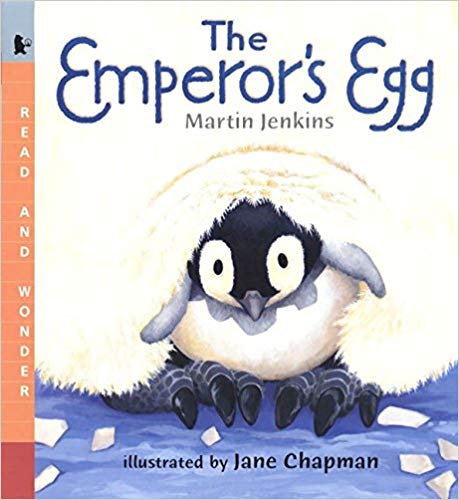
Jenkins M. (1999). The Emperor’s Egg. Somerville, MA: Candlewick Press.
Description: Can you imagine spending the winter outdoors in Antarctica without anything to eat? That’s just what the male Emperor penguin does. While his mate is off swimming and catching loads of fish, he stands around in the freezing cold with an egg on his feet for two whole months, keeping it warm and waiting for it to hatch. Welcome to the story of the world’s most devoted dad! Retrieved from Amazon.com on December 2, 2018: https://www.amazon.com/Emperors-Egg-Read-Wonder/dp/0763618713
Appropriate Age / Grade Level: ages 6 – 11, first – fifth grade
Justification: This is a book about penguins and what they do in the winter. This offers a great insight on penguins for kids. Standard W.2.2 says, that students will write informative/explanatory texts in which they introduce a topic, use facts and definitions to develop points, and provide a concluding statement or section. This book is a great source to use when focusing on writing about a topic using facts to support it. English/Language Standard, Retrieved on December 2, 2018 from: http://www.corestandards.org/ELA-Literacy/W/2/
Review: After Chapman (One Duck Stuck) lures readers with an irresistible cover image of a baby emperor penguin, the author documents the unusual role of the father in the birthing of this winning subject. Emperor penguins make their home in Antarctica, “”the coldest, windiest place on Earth.”” During the region’s chilliest season, a female penguin lays one egg and leaves her mate to incubate it; he rests the egg atop his feet, so that his feathery white belly keeps it toasty. “”What’s more, there’s nothing for the father penguin to eat on land…. So that means two whole months with an egg on your feet and no dinner!”” Chapman provides naturalistic acrylics of the frozen environment, against cold violet or warm orange backdrops. The blue-white ice and sky offset the charcoal feathers and buttercup-yellow breasts of the birds. Jenkins presents abundant penguin facts in the same conversational voice of Chameleons Are Cool but without the child narrator he used to such strong effect. Yet he achieves a similar tone, for instance, while speculating that the male penguin must be “”very, very miserable”” as it awaits the egg’s hatching and the mother bird’s return. Together with artwork that balances realistic details with the penguins’ implicit charm, Jenkins’s lively text will attract many readers to this tale of one of nature’s unique parenting arrangements. Ages 5-8. (Oct.) Publishers Weekly: https://www.publishersweekly.com/978-0-7636-0557-5
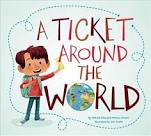
Diaz N., Owens M., Smith K. (2015). A Ticket Around the World. Berkeley, CA: Owlkids Book Inc.
Description: Join a young boy as he hops around the globe, visiting friends in 13 different countries spanning all six populated continents. Along the way, he introduces us to each friend’s environment and customs, and shares interesting facts about each country’s culture, language, food, geography, wildlife, landmarks and more. Each country has a dedicated spread with a small map that shows geography and landmarks, letting readers imagine they are traveling, too. The format makes it easy to spot similarities and differences between countries. Retrieved from Goodreads on December 2, 2018: https://www.goodreads.com/book/show/22750442-a-ticket-around-the-world
Appropriate Age / Grade Level: 4-8 years old, Preschool to second grade
Justification: This book is a great source to use for students to see what the different cultures and places around the world are like. They can read and identify the similarities and differences between the places that the boy visits.
Review: Rather than a comprehensive trip around the world, a quick expedition to 13 far-flung countries. A nameless, stateless Caucasian boy introduces friends from some countries not often mentioned in books of this ilk: Botswana, Costa Rica, the Philippines, Morocco, Jordan and Greece. Other countries are the usual suspects: the United States, Canada, Brazil, France, China, India and Australia. An introductory double-page world map includes pages numbers for each country. The cheery narrator proceeds to each place and provides similar facts. Each double-page spread shows a map, the flag and the climate in a little oval. A sight such as the Great Wall of China or the Parthenon is often included, favorite foods (but no recipes) are described, and a celebration is sometimes mentioned. The children the boy meets live in both urban and rural settings, but they take their “friend” to other regions to show that people live in different ways. There is no index or bibliography. All in all, the book, with its upbeat quiz at the end (“In Costa Rica, what volcano did Alberto and I visit?”), resembles an expanded magazine article more than a thoughtful global tour. Pictures such as those found in Music Everywhere (2014) and Maya Ajmera’s other photo essays with Cynthia Pon and other collaborators serve children better than the busy, retro cartoony illustrations here. Young readers need to know about their peers in other countries, but this looks like a book their grandparents might have read. (Informational picture book. 5-8) Retrieved from Kirkus Review on December 2,2018: https://www.kirkusreviews.com/book-reviews/natalia-diaz/a-ticket-around-the-world/
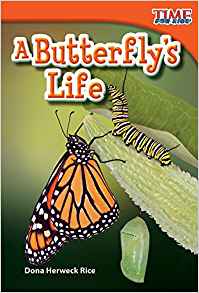
Rice D. (2012). A Butterfly’s Life. Huntington Beach, CA: Teacher Created Materials Inc.
Description: In this engaging nonfiction book, early readers are introduced to the life cycle of a butterfly. Readers will be captivated by the vivid photographs of the butterflys life, and informative text. Retrieved from Goodreads on December 2, 2018: https://www.goodreads.com/book/show/14452386-a-butterfly-s-life
Appropriate Age / Grade Level: 5 to 6 year olds, Kindergarten
Justification: This book would be great to use in science when talking about life cycles. As students read this book they can imagine and draw the stages of a butterfly’s life out.
Review: This book is perfect when trying to show the K-3 the life cycle of a caterpillar and how it turns into a butterfly. It shows how a caterpillar starts as an egg and its life process of becoming a butterfly. The book also gives the name of each stage that the butterfly goes through to become a butterfly. The real life pictures show the details of the caterpillar and butterfly. I would use this book in my classroom with a butterfly unit and have a fun activity! Retrieved from Goodreads on December 2, 2018: https://www.goodreads.com/book/show/14452386-a-butterfly-s-life
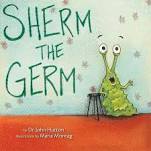
Hutton J. and Montag M. (2014). Sherm the Germ. Cincinnati, OH: Blue Manatee Press.
Description: Baby’s perfect day of play is interrupted by an unwelcome, microbial visitor—Sherm the Germ. Written by a pediatrician and brought to life through playful illustrations, this fun, rhyming book describes the stages of becoming sick and then getting better. A perfect read-aloud for those wishing to get well soon or any budding physician, this board book uses a loveable character to teach readers on the basics of what it means to catch a cold or virus and how the healing process works. Retrieved from Amazon on December 2, 2018: https://www.amazon.com/Sherm-Germ-Dr-John-Hutton/dp/1936669242/ref=sr_1_1?ie=UTF8&qid=1543981300&sr=8-1&keywords=sherm+the+germ
Appropriate Age / Grade Level: 1 to 3 years old, Preschool
Justification: This book has a great story line about being sick and what your illnesses do to your body. As your students listen to this book and view the pictures it will inspire them to be clean and keep themselves healthy at all possible cost.
Review: “These books work on so many levels, with poetry to hear, pictures to talk about, and a powerful message. They give children just the sort of delightful and mind-expanding experiences they need, while leading parents to see the child’s world through a creative and joyful lens. Wonderful medicine for an overly electronic age!” —Dr. Robert Needlman, MD, associate professor of pediatrics, Case Western Reserve University School of Medicine, and cofounder, Reach Out and Read, on the Baby Unplugged series.“These are the kinds of books that will bring you and your child together over and over again as you snuggle and read – colorful, welcome additions to your bookshelf.” —Shari Schmidt, OMB (Oh My Books) ChicagoNow blog, on the Baby Unplugged series“Bright, creative and perfect for young readers just getting introduced to books. Babies and toddlers will love these books as well as the others in the series.” —SocialCafé Magazine, on the Baby Unplugged series. Retrieved from Amazon on December 2, 2018: https://www.amazon.com/Sherm-Germ-Dr-John-Hutton/dp/1936669242
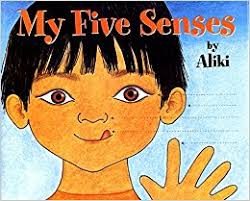
Aliki (1991). My Five Senses. New York, NY: HarperFestival.
Description: Sight, smell, taste, hearing, and touch—our five senses teach us about our world. Beloved author-illustrator Aliki’s simple, engaging text and colorful artwork show young readers how they use their senses to smell a rose or play with a puppy. Retrieved from Goodreads on December 2, 2018: https://www.goodreads.com/book/show/1963140.My_Five_Senses_Big_Book
Appropriate Age / Grade Level: 3 to 8 year olds, Preschool to Second Grade
Justification: This book can be used to teach students about their five senses and what they are used for. A student can connect this with their life and daily experiences.
Review: “A world of a child is a world of discovery” is a direct quote from the author of this book, Aliki. These are the first words I read on the inside from cover and I could not agree with him more. These words really resonated with me, and helped me connect with this book. The illustrations are amazing. The book walks through the five senses with children, through the eyes of a little boy. He is very young, and I would say preschool age and learning about his five senses. The pictures are very detailed and focus on each sense appropriately. The book walks through the senses, what they do, how they work and what part of the body uses them. The book then walks through everyday activities and how we use our senses throughout the day. This is the perfect book for children. I like the pictures a lot, and that is what will probably carry most with me. I can see myself using the pictures and having the children guess what sense they would use to figure out what it is. They might use all of their senses. I would recommend this book to young children, probably the preschool age. The boy in this book looks very young, around that age. Younger children will be able to relate as they are beginning to learn about all of their senses. Retrieved from Goodreads on December 2, 2018: https://www.goodreads.com/book/show/1963140.My_Five_Senses_Big_Book#other_reviews
Fiction Book Choices
Kinney, J. (2007). Diary of a Wimpy Kid. New York, NY: Amulet Books.
Description: It’s a new school year, and Greg Heffley finds himself thrust into middle school, where undersized weaklings share the hallways with kids who are taller, meaner, and already shaving. The hazards of growing up before you’re ready are uniquely revealed through words and drawings as Greg records them in his diary. Retrieved from Goodreads on December 2, 2018: https://www.goodreads.com/book/show/389627.Diary_of_a_Wimpy_Kid
Appropriate Age / Grade Level: 9 years of age and older, fourth grade to tenth grade
Justification: There are many life lessons that students can learn from this book. One of the life lessons that is taught in this book is bullying. The cheese touch is a form of bullying because the student who has the “cheese touch” is considered to be contagious and no one wants to be around them.
Review: Funny, the way things we write in cyberspace stick around…or maybe not so funny. This review is continuing to get the occasional “like” or comment, so I guess people are still discovering it. Just thought I’d add a note, in the interest of honesty. My son, with whom I tried to read this book three-plus years ago and found inappropriate at the time, has since read all the books (much to my chagrin) and has pre-ordered the latest (are we up to #6?!) I’ve made him spend his own money or get them from the library, as my feelings about this series haven’t changed that much that I’m willing to purchase them myself. However. I do not believe in censoring my readers, although I hope to guide them in their choices. He’s read these. He’s also read some other books that I feel are more exemplary. Frankly, my own literary choices include both the laudable and the merely fluffy. So there you have it. These books are in my house. I’m not an evil mom who refuses her child access to popular fun lit. But I still don’t like them. Retrieved from Goodreads on December 2, 2018: https://www.goodreads.com/book/show/389627.Diary_of_a_Wimpy_Kid
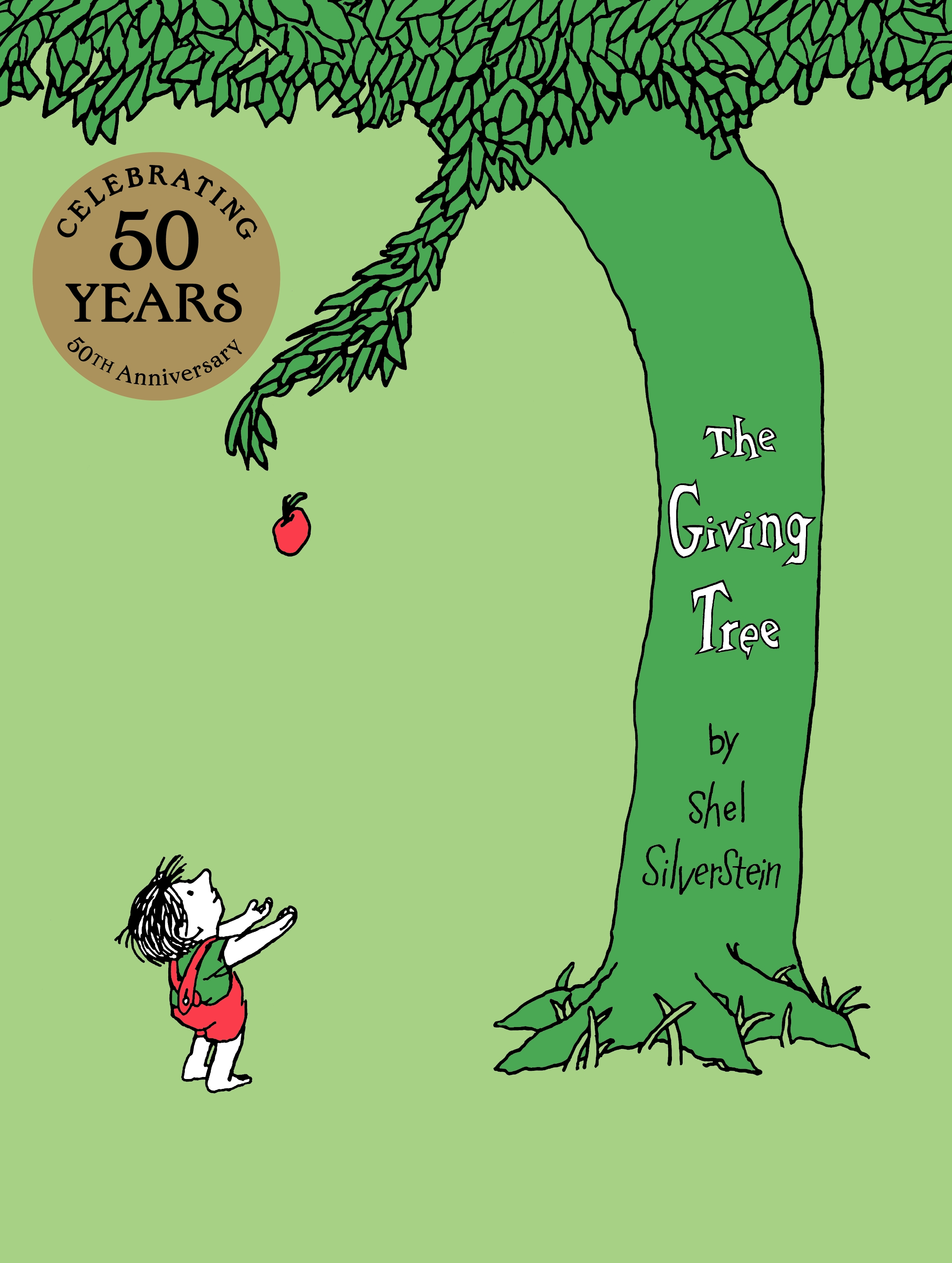
Silverstein, S. (1964). The Giving Tree. New York, NY: HarperCollins Publishers.
Description: Once there was a tree…and she loved a little boy. So begins a story of unforgettable perception, beautifully written and illustrated by the gifted and versatile Shel Silverstein.
Every day the boy would come to the tree to eat her apples, swing from her branches, or slide down her trunk…and the tree was happy. But as the boy grew older he began to want more from the tree, and the tree gave and gave.
Shel Silverstein has created a moving parable for readers of all ages that offers an affecting interpretation of the gift of giving and a serene acceptance of another’s capacity to love in return. Retrieved from Shelsiverstein.com on December 2, 2018: http://www.shelsilverstein.com/books/book-title-giving-tree/
Appropriate Age / Grade Level: 4 years old and up, Preschool through sixth grade
Justification: This book is a great tool to teach students about being selfless. If you share this book with younger students you can teach a less on what that should do verses what should not be done.
Review: I came across this book as an adult and while the book is written for children, the message is a universal one: Selfless love. I couldn’t help crying when I got to the end–Silverstein’s gentle prose is poetic and inspiring. The book opens a forum for parents to talk to their children about responsible love, giving of self, Mother nature, etc. I plan on buying the book for my godchild when he turns 4; this way we’ll be able to talk about the book’s message. Retrieved from Goodreads on December 2, 2018: https://www.commonsensemedia.org/book-reviews/the-giving-tree/user-reviews/adult
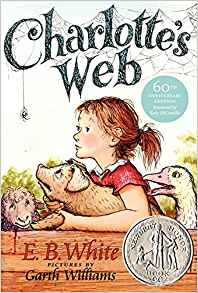
White,E. B. (2006). Charlotte’s Web. New York, NY: HarperCollins Publishers.
Description: Some Pig. Humble. Radiant. These are the words in Charlotte’s Web, high up in Zuckerman’s barn. Charlotte’s spiderweb tells of her feelings for a little pig named Wilbur, who simply wants a friend. They also express the love of a girl named Fern, who saved Wilbur’s life when he was born the runt of his litter. Retrieved from Amazon on December 2, 2018: https://www.amazon.com/Charlottes-Web-B-White/dp/0061124958
Appropriate Age / Grade Level: 8 to 12 years old, third grade to seventh grade
Justification: This book is a great source to use to show students that everyone has a purpose in this word, no matter how small or big they are. You can have your students read this and compare it to their own lives.
Review: I saw this movie with my two sons and wife and we all enjoyed it. We were very familiar with both the book and original animated movie, which we highly enjoyed. This movie is very well done both in terms of money spent, but also in the time and quality taken. The story moves along nicely, never dragging, and the emotions are never overwhelming. I do have to say that I missed Henry Gibson as the voice of Wilbur but that was a personal bias, the young actor who voiced Wilbur did a good job. My sons found many things to laugh at and the darker moments, (not wanting to spoil anything for anyone who does not know the story)are handled deftly so sensitive children will not get upset. An excellent family movie. Retrieved from IMDB on December 2, 2018: https://www.imdb.com/title/tt0413895/
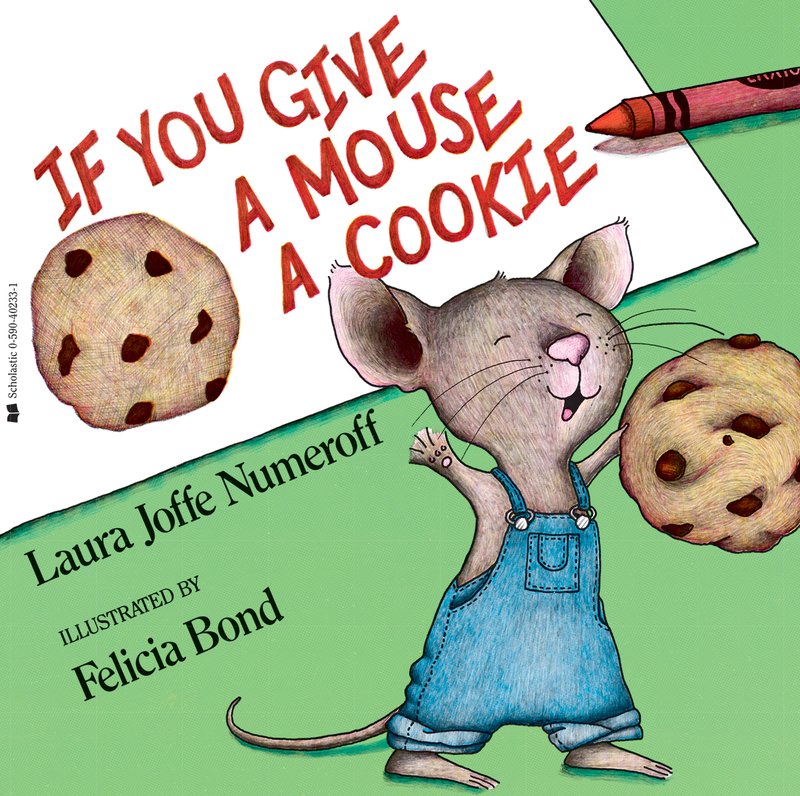
Numeroff, L. (2015). If You Give a Mouse a Cookie. New York, NY: HarperCollins Publishers.
Description: If a hungry little mouse shows up on your doorstep, you might want to give him a cookie. And if you give him a cookie, he’ll ask for a glass of milk. He’ll want to look in a mirror to make sure he doesn’t have a milk mustache, and then he’ll ask for a pair of scissors to give himself a trim…. Retrieved from Amazon on December 2, 2018: https://www.amazon.com/You-Give-Mouse-Cookie-Book/dp/0060245867
Appropriate Age / Grade Level: 4 to 8 years old, Preschool to second grade
Justification: This is a book about consequences and a sequence of events. As a teacher you can use this book to talk about text features such as sequence of events or cause and effect.
Review: We love this show! The kids and animals are all super sweet, and their adventures always take them in unexpected directions. There’s no foul language, no sassing adults, no violence, no sex. Just goofy kids and adorable animals exploring their world and meeting new friends along the way. The animation style is very in keeping with the books. The pace isn’t frenetic (as it can be on many children’s shows), and the characters are all really good role models. No matter what they’re doing, they’re never too busy to help out a friend. I also like that it shows the kids problem solving, figuring out different creative ways to tackle any issue. It’s silly, and sweet, and the songs are all very singable ear-worms. Retrieved from Common Sense Media on December 2, 2018: https://www.commonsensemedia.org/tv-reviews/if-you-give-a-mouse-a-cookie/user-reviews/adult
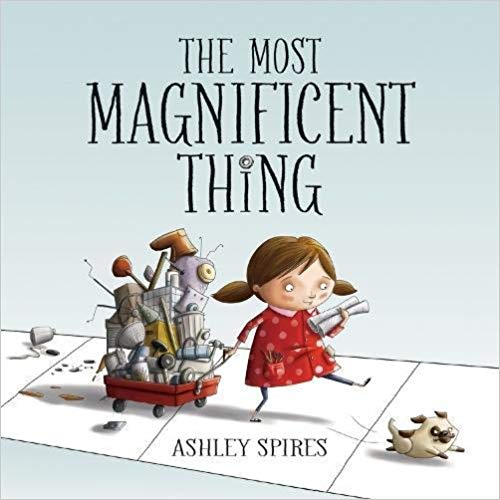
Spires, A. (2014). TheMost Magnificent Thing. Toronto, Ontario, Canada: Kids Can Press
Description: Award-winning author and illustrator Ashley Spires has created a charming picture book about an unnamed girl and her very best friend, who happens to be a dog. The girl has a wonderful idea. “She is going to make the most MAGNIFICENT thing! She knows just how it will look. She knows just how it will work. All she has to do is make it, and she makes things all the time. Easy-peasy!” But making her magnificent thing is anything but easy, and the girl tries and fails, repeatedly. Eventually, the girl gets really, really mad. She is so mad, in fact, that she quits. But after her dog convinces her to take a walk, she comes back to her project with renewed enthusiasm and manages to get it just right. For the early grades’ exploration of character education, this funny book offers a perfect example of the rewards of perseverance and creativity. The girl’s frustration and anger are vividly depicted in the detailed art, and the story offers good options for dealing honestly with these feelings, while at the same time reassuring children that it’s okay to make mistakes. The clever use of verbs in groups of threes is both fun and functional, offering opportunities for wonderful vocabulary enrichment. The girl doesn’t just “make” her magnificent thing — she “tinkers and hammers and measures,” she “smoothes and wrenches and fiddles,” she “twists and tweaks and fastens.” These precise action words are likely to fire up the imaginations of youngsters eager to create their own inventions and is a great tie-in to learning about Science, Technology, Engineering and Math. Retrieved Amazon on December 2, 2018: https://www.amazon.com/Most-Magnificent-Thing-Ashley-Spires/dp/1554537045
Appropriate Age / Grade Level: 3 to 7 years old, Preschool to second grade
Justification: This books shows what can happen when you use what you know about mathematics, engineering, and technology. You can combine the three and create a new and helpful item.
Review: The Most Magnificent Thing by Ashley Spires is a children’s book about a girl with an imagination and teaches about the importance of never giving up on yourself. A girl has a vision of creating something magnificent. She starts building things with her little dog assistant. As she builds one thing after another, she isn’t happy with any of her new creations. They just didn’t come out like she imagined they would. Disgusted, she walks away from all of her creations to take her dog for a walk and finally she realizes that there’s something great about each and every one of them. Children will stay engaged with the story while viewing and enjoying the colorful illustrations on a black and white background. The author does an amazing job with teaching children about the emotions that we feel and how sometimes it’s good to take a break and rehash it at a later time. I love the message that it sends and think every child should read it. This is a perfect character building book for schools and even for reading at home with a child. I’d like to thank Netgalley, the publisher, and the author for sharing this book with me. Retrieved from Goodreads on December 2, 2018: https://www.goodreads.com/book/show/18383325-the-most-magnificent-thing

 Site Title